

Operating at scale: Inside the supply chain
What makes Kaingaroa Forest Estate different is the scale and contiguity. It is largely a single, predominantly connected landscape of 235,000 hectares that allows it to be managed as one. This continuity makes it easier to plan operations and logistics well.
“Our forest footprint means we can operate as one big, connected unit,” says Gareth Bowen, Kaingaroa Tipu (KT) Harvesting and Logistics Manager. “Off highway trucks, internal roads, and rail integration all work together as a single system, which is very different to anywhere else.”
By managing every stage of the value chain, from nursery and planting through silviculture, harvest, and replanting, Kaingaroa Tipu avoids the fragmentation common in smaller or multi-owner forests. Boundaries and access are regulated. Biosecurity is easier to control. Roads and haulage routes are engineered for safety, efficiency, and environmental performance with less reliance on public networks.
The result? Fewer vehicle movements mean lower emissions, and a lighter carbon footprint across the supply chain.
“Supply chain influences sustainability,” adds Colin Maunder, Kaingaroa Tipu General Manager Sustainability.
Much of KT’s harvest is moved through an established internal roading network to supply local processors, including Donnelly’s Sawmill, Sequal, Carter Holt Harvey Wood Products, and Oji Fibre Solutions.
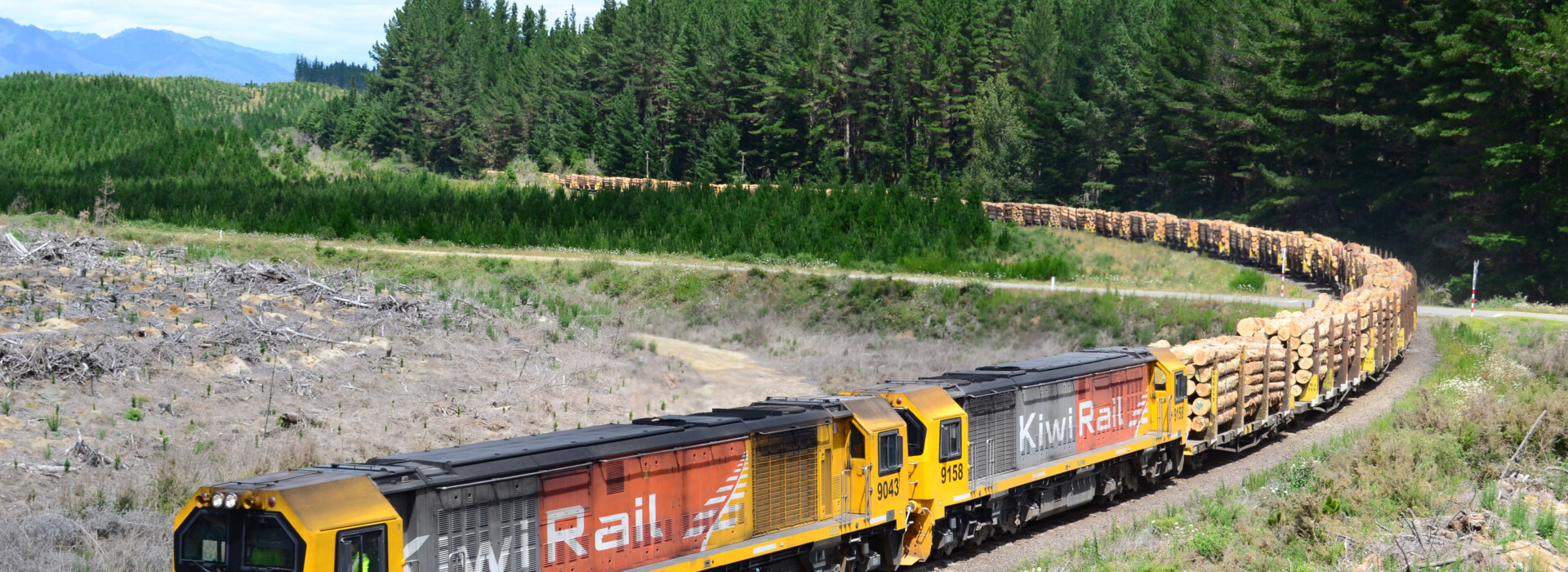
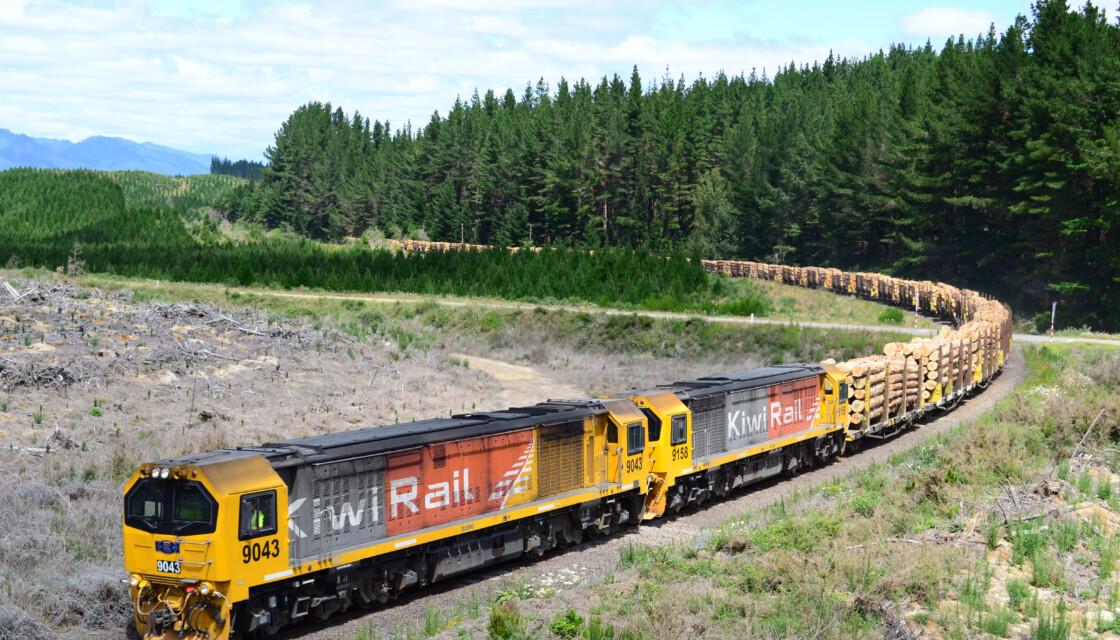
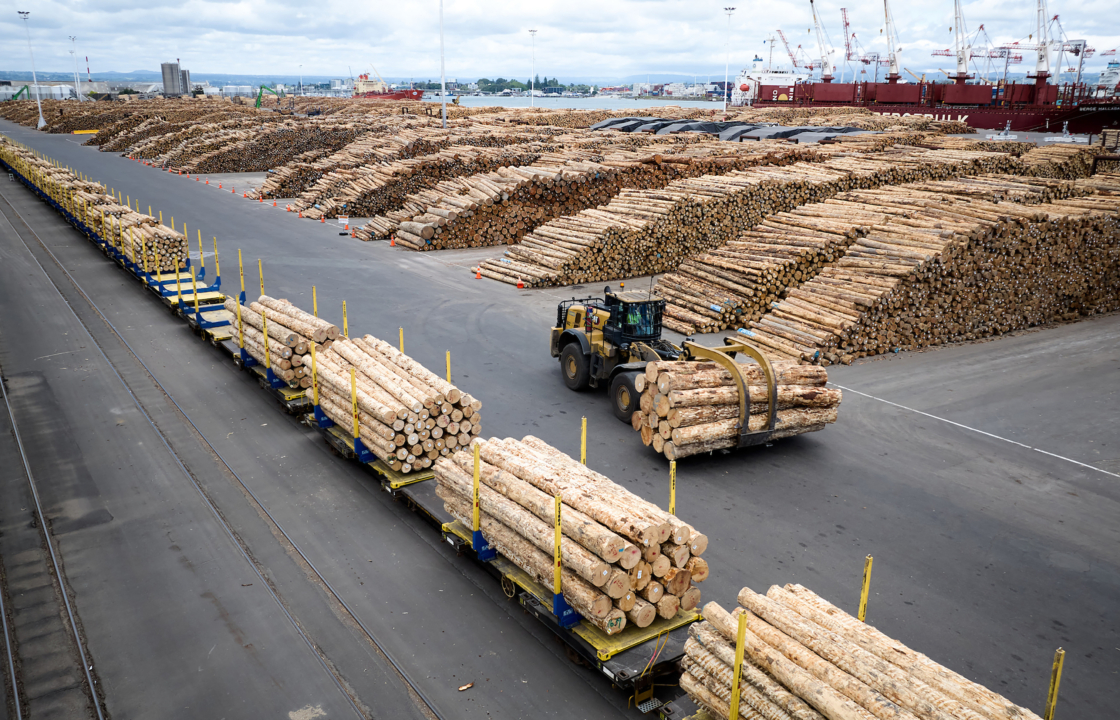
The same network also links harvest sites to KiwiRail’s Murupara and Kawerau railheads, where logs travel via the 57km Murupara Branch line to the East Coast Main Trunk and on to the Port of Tauranga.
“The KiwiRail portion of our supply chain is significantly lower carbon emissions than trucking that volume to port,” Gareth explains.
By shortening the “first mile” between forest and rail, many long-haul truck movements on public roads can be largely avoided. The private road system and rail link form a lower-emission supply chain operating at industrial scale.
Progress stands on decades of refining our ways of working. For Kaingaroa Tipu Chief Operating Officer, Dean Witehira, the link between operations and climate outcomes is straightforward.
“We’ve spent decades refining how our infrastructure, systems, and contractors work together. That integration is what allows us to move fibre efficiently and reduce the volume of transport movements required in our supply chain.”
“With a contiguous estate and a well organised supply chain, we’re already achieving real efficiency gains. The next step is harnessing modern technology to take that even further.”
The Data
85,000 reduction in heavy vehicle trips
Rail freight enables Kaingaroa Tipu to eliminate the need for approximately 85,000 heavy vehicle trips each year. This directly lessens road congestion, wear and tear on local infrastructure, and the safety risks associated with long-haul truck movements from forest to port.
5.8m Litres major fuel and cost savings
By shifting freight from road to rail, Kaingaroa Tipu saved approximately 5.8 million litres of diesel in FY2022. That efficiency translates to lower fuel costs, reduced exposure to fuel price volatility, and greater overall energy resilience across the forestry supply chain.
15,687t CO2 emissions reduction*
Rail’s lower emission factor compared with heavy vehicle diesel use resulted in 15,687 tonnes of CO₂ emissions avoided. This represents a contribution to Kaingaroa Tipu’s climate and sustainability initiatives, and to support decarbonisation goals.
*These figures represent estimated avoided emissions and fuel use compared to a heavy-vehicle road transport scenario, based on third-party data supplied by KiwiRail for FY2022 (between 1/07/21 and 30/06/22). They do not represent Kaingaroa Tipu’s total operational or lifecycle emissions. Data is based on Kaingaroa Tipu Man Ltd Steel Wheels FY2022 information supplied by KiwiRail.