

Frontline challenge turns into $10k micro innovation win
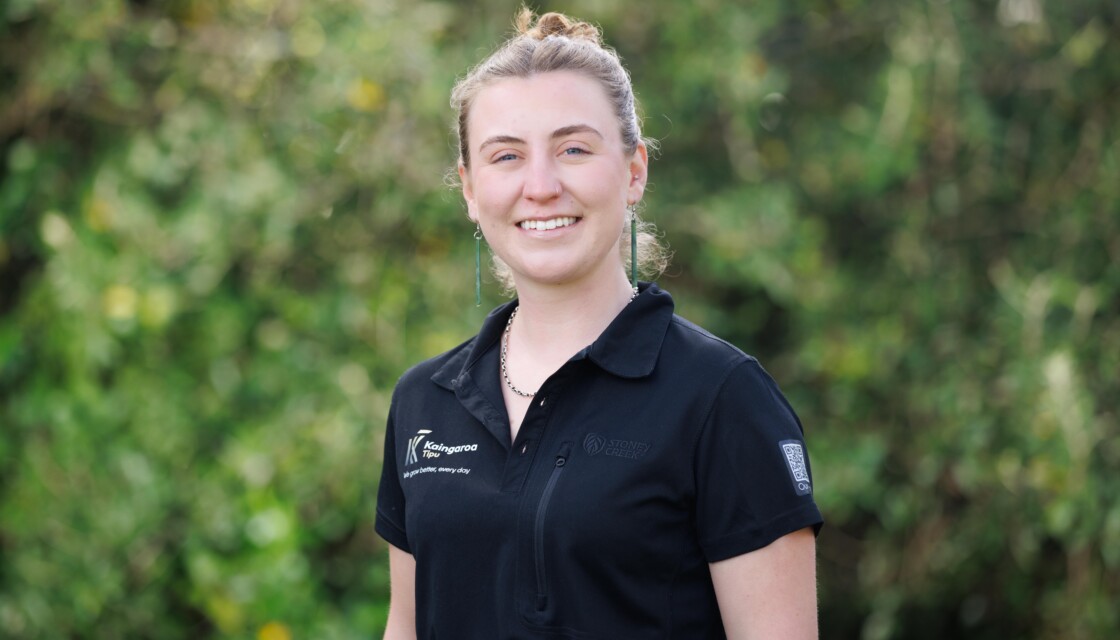
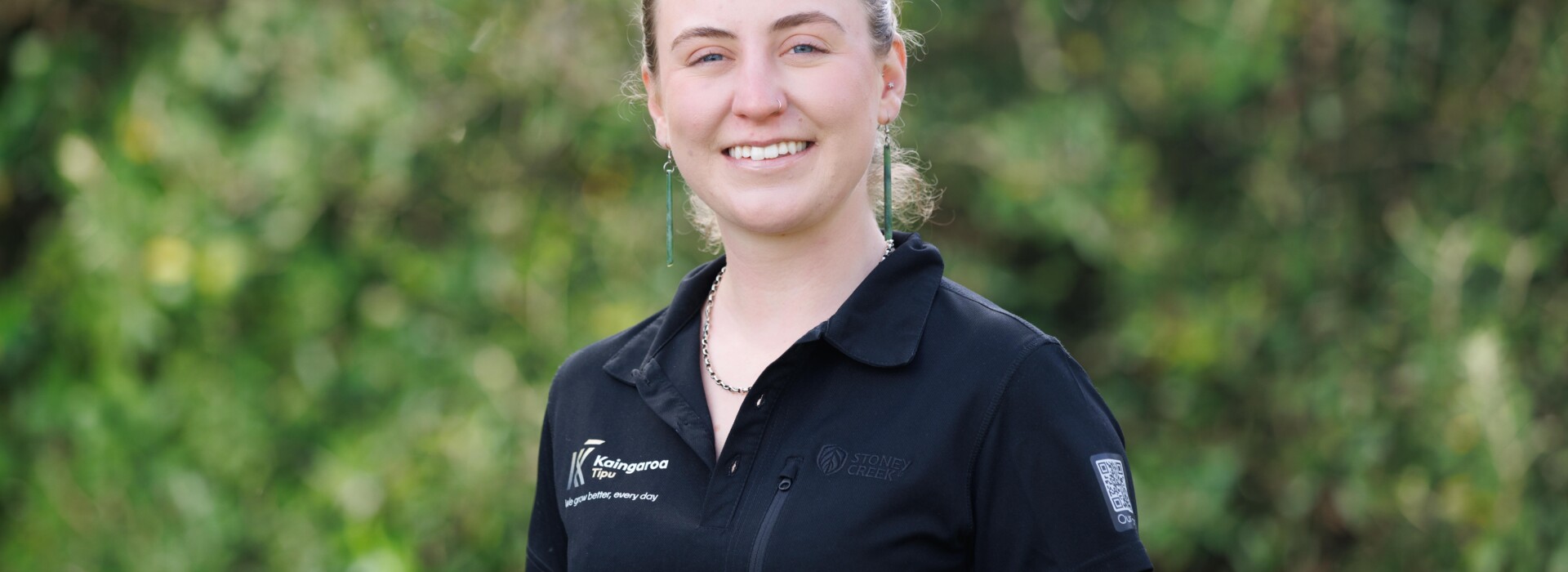
When Forest Growers Research launched its 2025 Youth Micro Innovation Challenge, it set out to unlock the ingenuity of young forestry professionals working at the frontline. For Establishment Forester Tessa McCarthy, the spark for her winning idea came from working in blackberry as a graduate.
“I started working with pruning crews in May last year,” she says. “We had a really warm autumn and we were in quite a tough blackberry block. I was watching the guys push their way through. They either chose to have no arm protection to manage the heat, or they wore two hoodies and overheated.”
Neither option sat well with her.
Bare arms meant scratches and thorns. And in forestry, blackberry scratches aren’t minor inconveniences – they can become infected, layered on top of old cuts, day after day. Hoodies reduced the scratches but created a different risk.
“If they’re not keeping up hydration, that exposes them to heat exhaustion,” Tessa explains. “Sometimes you can push through it, but it hits you later. Or the next day.”
For Tessa, it was clearly a health and safety issue, but also a wellbeing issue. “It’s mentally challenging too. It’s an environment where you just have to push through.”
Her brain, as she puts it, is “always ticking over” when she’s out in the forest. “When you’re out there, you’re doing your job, and your mind is free to think.”
One simple question emerged: If we’ve got leg chaps, why don’t we have arm chaps?
The idea wasn’t confined to the forest. At home, Tessa and her mum were battling blackberry on their lifestyle block. “Mum was getting really ripped up too. I thought, this isn’t just a forestry problem.”
Before the challenge even opened, Tessa had begun experimenting. In true upcycling style, she salvaged old car seat covers destined for the bin to use as canvas. When the Youth Micro Innovation Challenge was announced, it felt like the right pathway to take her idea further.
Unlike traditional funding rounds, the process was deliberately simple. No lengthy business case – just a clear explanation of how the innovation would improve forestry. With up to $10,000 available and a fast-track timeframe, it was designed to move ideas quickly into proof-of-concept.
Tessa’s concept, Forestry Arm Chaps, was selected as one of two winners. The funding allowed her to purchase an industrial sewing machine and materials to build a robust prototype. But as with most forestry projects, the timeline had to flex around operational realities. Planting season was intense, and Tessa negotiated an extension so she could give the design the attention it deserved.
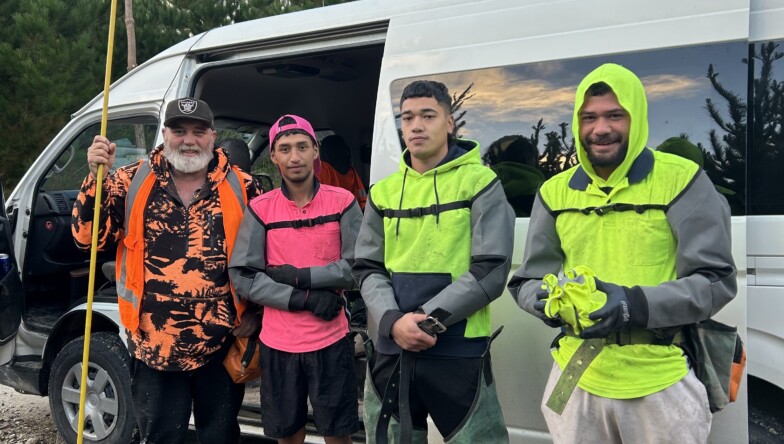
She completed her first field test in early December with a volunteer from a crew working in Murupara.
“I was a bit nervous,” she admits. “At first they looked at me like… what is this? But once I showed them, they were really encouraging. They said it’s something they would use and wanted to be part of the trial.”
That response mattered. “If you design PPE that’s more of a hindrance than a help, it just won’t be adopted.”
Designed for pruners and built differently
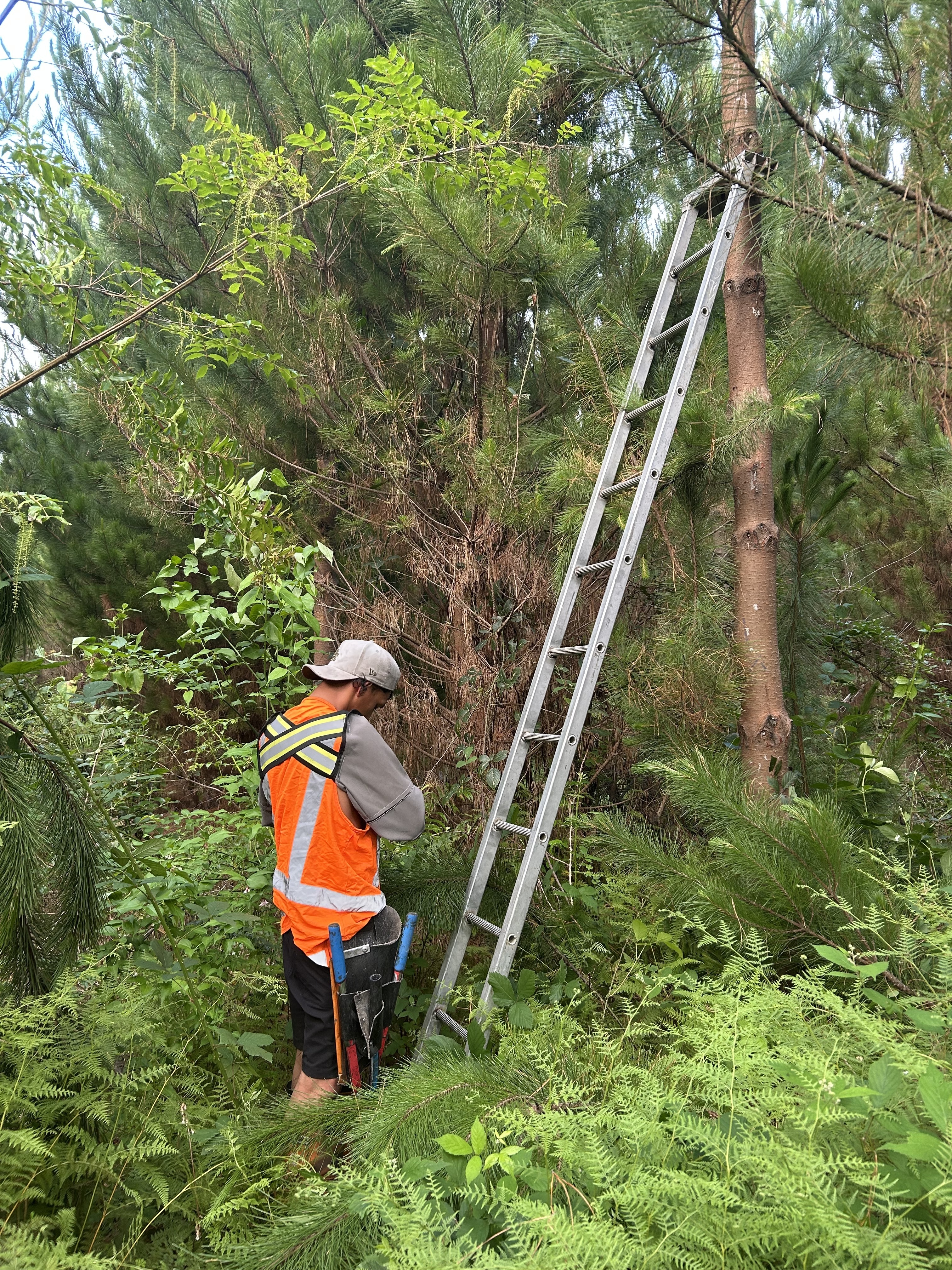
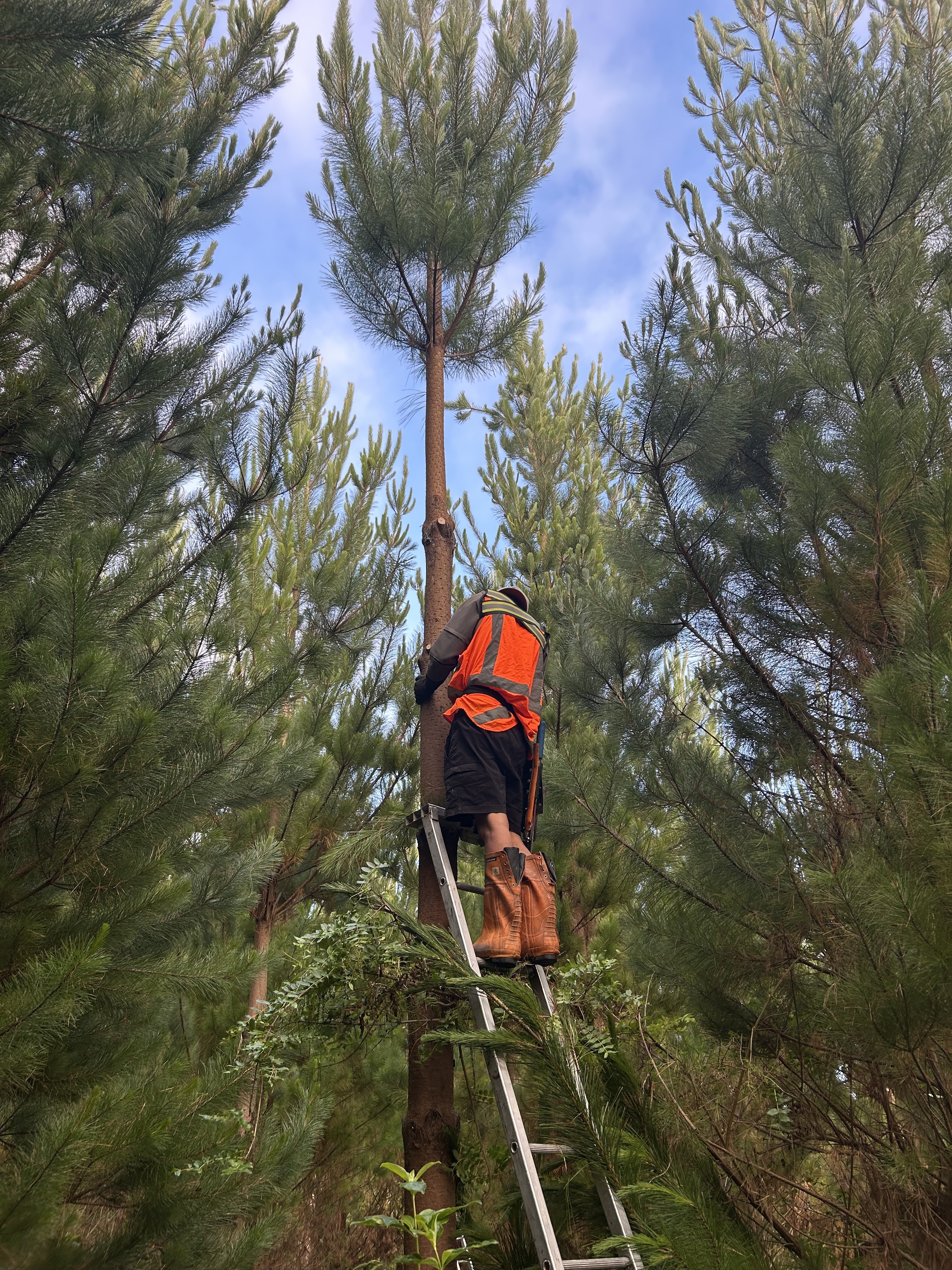
Arm protection isn’t entirely new in forestry. But Tessa is clear that her design targets a very specific user group: pruners operating in high-intensity, high-movement environments.
“With plotting, you’re putting your arm around the tree and breaking through blackberry. With pruning, there’s so much more movement. You’re bending your arms all day, stretching your back, climbing ladders. Your joint movement can’t be impacted.”
That insight shaped every design decision. While other arm chaps she’d seen were full canvas, Tessa introduced flexible neoprene panels at the elbow to allow natural movement and reduce pinching. “Full canvas would just pinch all day.”
She also added a soft cuff at the wrist for comfort. She has also replaced Velcro closures with adjustable buckles for durability and longevity. “Velcro wears out. I want this to last.”
Back straps were redesigned to accommodate the wide variation in men’s body shapes. This year, a full-size range, from small to XL, were produced for trials involving crews in dense blackberry blocks where the benefits were expected to be the most evident. Feedback to date has been overwhelmingly positive, with users reporting they “love them”.
Contractors R & L Contracting are providing feedback from the field and KT’s Tree Establishment Manager Rob Brown has been a sounding board for Tessa during trials. OHS Partnering General Manager Ian Barrett applauds Tessa’s efforts.
"Tessa has taken a real frontline challenge, listened to the people doing the work, and developed a solution that has the potential to reduce injury risk, improve comfort and support better wellbeing in tough operating conditions.”
Tessa is now working on a name for her product, but she says the goal isn’t commercial success. I’m not money driven. I’m people focused. If I can improve the working environment of the workers out there, that’s what matters.”
In many ways, the project mirrors forestry itself. You don’t see transformation overnight. You test, you refine, you adjust — and over time, you grow something stronger.
That philosophy of growing better every day is embedded in our culture at Kaingaroa Tipu, and Tessa’s Forestry Arm Chaps are a tangible example of that commitment in action — improving safety, comfort and confidence through small, practical changes that make a real difference in the field.
Tessa also recognises the potential beyond forestry. Farmers, lifestyle block owners, conservation workers, even search and rescue volunteers could benefit from flexible arm protection in thorny environments.
In five years? “If there’s demand, it could go further,” she says. More than anything, the journey has reinforced her belief in backing your ideas.
“Don’t let doubt deter you,” she says. “People will tell you it’s already been done. I’ve had that. But you can’t let that stop you from giving it a go.”
The process has also equipped her with practical innovation skills she’ll carry into her forestry career – understanding design, testing, iteration, and the importance of end-user feedback.
In a way, the project has brought together two of her passions. “I was almost going to study fashion design,” she laughs. “It came down to fashion or forestry.”
Forestry won, but through the Micro Innovation Challenge, the two have merged in an unexpected and impactful way.
What is Micro Innovation?
Micro Innovation is the process of identifying practical ideas from people doing the work and turning them into simple, effective solutions that improve safety, efficiency, productivity, or operational performance.
Through the Micro Innovation Challenge, promising ideas receive support and resources to be developed into real-world prototypes and tested in the field. It is an annual competition run by Forest Growers Research with funding from the Forest Growers Levy Trust and the WIDE Trust.