


We partner closely with landowners across our operations.
This includes our close relationship with CNI Iwi Holdings Limited.
Primary areas of focus include caring for the environment, creating opportunities for employment, development and the protection of cultural sites. Each relationship is unique, shaped by listening and developing a shared respect for the natural environment and people.
Our relationships with iwi are underpinned by an acknowledgement of, and shared commitment to, the care of the natural environment and the forest.
Building stronger relationships
Continuing to build strong relationships with iwi landowners is central to our work. We are committed to working together, with respect and open communication. This is always based on a shared interest in caring for the natural environment that a healthy and sustainable forest relies on and supports.
There is no one-size-fits-all approach to partnering. Each iwi relationship reflects what’s important to them. Some relationships are more formal, others are built on day-to-day collaboration. Together, we find solutions that protect cultural values, support sustainable use of resources, and create value and opportunities.
Working together with:
-
Ngāi Tūhoe
-
Ngāti Manawa
-
Ngāti Whare
-
Ngāti Whakaue
-
Ngāti Rangitihi
-
Ngāti Tūwharetoa
-
Ngāti Raukawa
-
Te Pumautanga o te Arawa
-
Ngāti Awa
-
Ngāti Mākino
-
Ngāti Rangiwewehi
-
Ngāti Rangiteaorere
-
Tarawera Land Company
-
Tuhourangi Tribal Authority
-
Tautara Matawhaura Trust
-
Ngāti Tahu-Ngati Whaoa
-
Ngāti Tamateatutahi–Ngāti Kawiti
-
Ngāti Hurungaterangi
-
Ngāti Taeotu
-
Ngāti Te Kahu
Partnering takes many forms:
Cultural and environmental protection
We work alongside iwi to identify, protect, and restore culturally significant sites, such as pā, wāhi tapu, and archaeological areas. This includes archaeological surveys, blessings before operations, and native planting projects along waterways and around special sites.
Access and kai gathering
Our processes allow iwi members to safely access the forest all year for hunting and gathering kai, particularly for special occasions such as tangihanga. This ensures these practices can continue while keeping people and our operations safe.
Joint projects and planning
We collaborate on environmental restoration, pest control, stormwater management, and land use planning. In some areas, we co-design operational plans to ensure iwi values are upheld.
Employment and development pathways
We are committed to creating opportunities, scholarships and career pathways for iwi, to build value and active participation in forestry.
Support for marae and community needs
We make resources such as firewood available for marae and support iwi-led initiatives that benefit their people.
Recreation and tourism
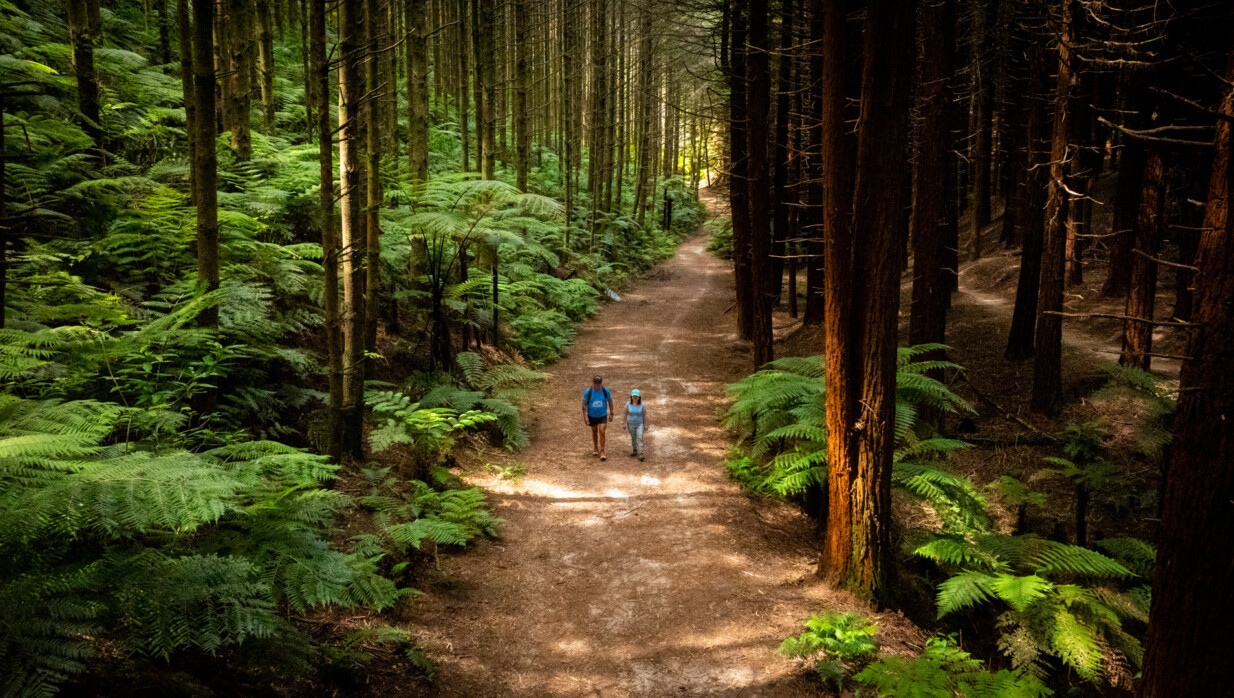
In partnership with iwi, councils, and community groups, we help manage recreational access, trails, and facilities so everyone - locals and manuhiri (visitors) - can enjoy the forest while respecting its cultural and environmental significance.
Together, we are caring for the forest every day, while ensuring it remains for future generations.
Like the best relationships, our work with iwi is about seeking mutual benefit, based on deepening our understanding of each other. The forest is a source of history, identity, and sustenance for iwi. Their knowledge, world view and values increasingly guide us to better manage the estate in ways that are culturally appropriate, environmentally responsible and create value for all.
Working in partnership is a living process. It requires remaining open and fronting up when issues arise. In this way we can work together to address concerns, find practical solutions, and improve how we operate. By listening, adapting, and acting in good faith, we aim to continue to strengthen trust over time.
Our connections with iwi are woven into the fabric of how we work. Together, we are caring for the forest every day, while ensuring it remains for future generations.
Ngāti Hurungaterangi, Ngāti Taeotu and Ngāti Te Kahu are tangata whenua of the 114-hectare site where Kaingaroa Tipu is situated in the Te Papa Tipu Innovation campus.