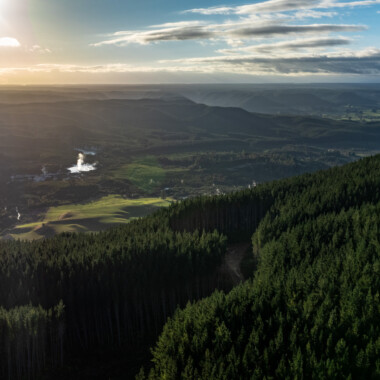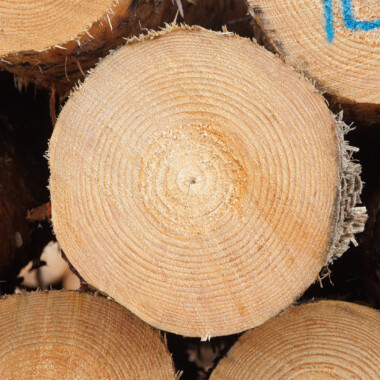
Growing better through innovation
Innovation is critical to the future of our business. Our success today has been built on 100 years of hard mahi and innovation by those who have gone before us.
It’s now our responsibility to ensure this giant ecosystem continues to flourish for future generations.
To do this, we focus on the future and the challenges and opportunities it presents. These include climate change, consumer trends and demand for future wood products. We consider population dynamics, the future workforce, energy transition and pest and disease risk, while striving for better community wellbeing and protecting and enhancing biodiversity.
One area of our innovation is increasing future productivity to ensure that forestry remains a long-term sustainable land use in the future. Increasing our efficiency enables us to de-intensify in some areas of the estate to protect and enhance the environment, provide habitat for biodiversity, enhance cultural values, and provide greater recreation opportunities.
We are innovating every day to make our forests and the environment better for future generations.


Growing better trees
Our genetic improvement team specialises in the development and deployment of high-quality well-tested clones and families of radiata pine designed to grow well in the Kaingaroa Forest Estate.
Alongside our innovative breeding programs our genetic research efforts are paving the way for the future of sustainable forestry.
The selection of appropriate tree stocks is a key factor in the final value of forest plantations, especially as greater emphasis is put on growing trees for high-value end uses. It becomes more important than ever to grow more wood, and wood of a suitable quality for processing.
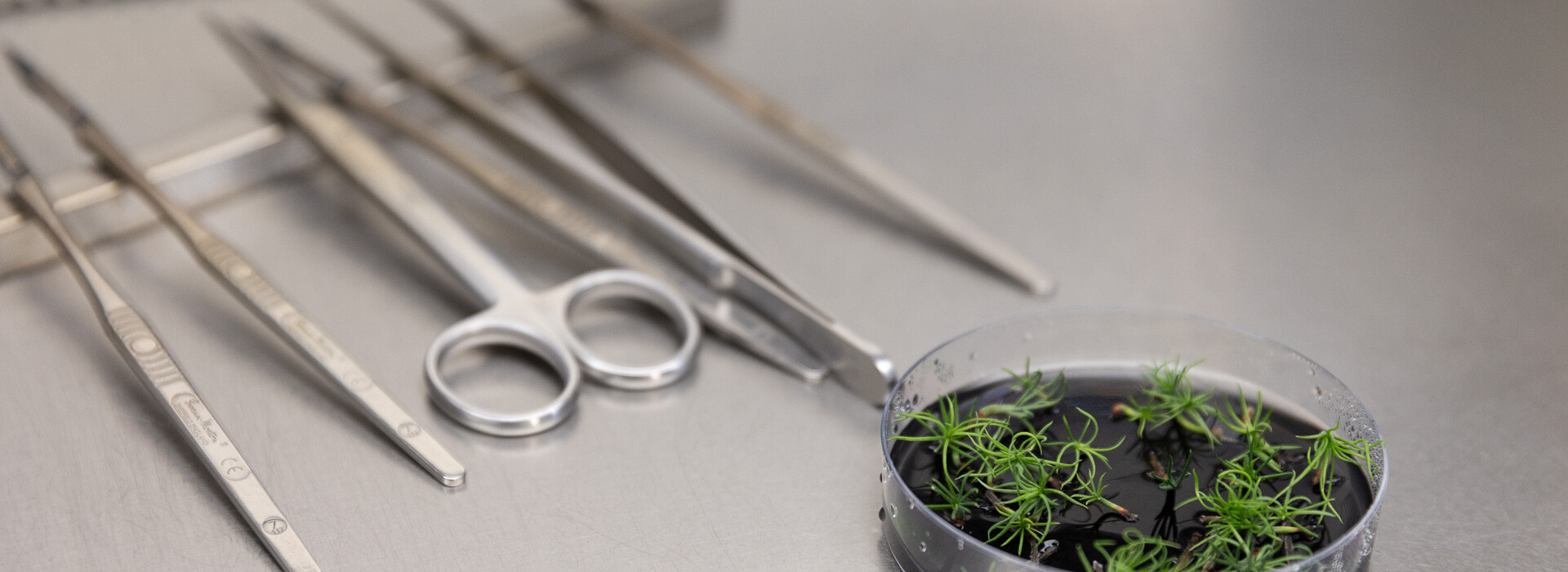
Recent advances in biotechnology provide opportunities to enhance the value of the radiata pine forests of tomorrow. Our genetic improvement team uses state-of-the-art tree breeding, variety selection, tissue culture and vegetative propagation methods to produce tree stocks that are superior to those available in the market today.
Deployment of this genetic resource is through our own nurseries which produce between seven and eight million trees per year for planting in our forests. At least half of our annual nursery production is clonal cuttings which have been widely tested and improved upon across our forest estate since 2005.
The scale of this research is unmatched in New Zealand. With the data we gather we can lift yields and improve wood quality - growing better trees, every day.
Better nutrition
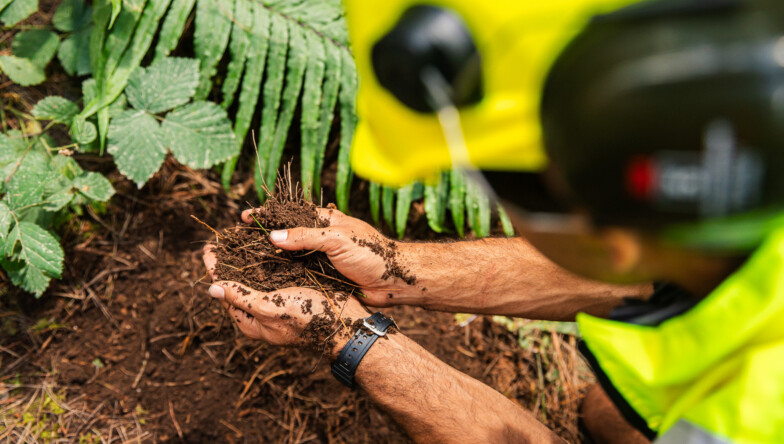
Our nutrition strategy plays a key role in helping to sustainably increase growth. Through research and trials, we are developing new approaches to correct nutrient deficiencies and imbalances and gain a better understanding of the role of soil fungal and microbial communities in tree growth and health. We are testing nutrition strategies that enhance forest growth while minimising environmental impacts.
Better forest management
Understanding the attributes of our trees helps us manage our forests better. We closely monitor tree growth with traditional field surveys as well as innovative use of remote sensing technologies such as light detection and ranging (LiDAR) and satellite imagery. Unmanned aerial vehicles (UAV's) allow us to capture high-resolution imagery and quality data to provide vital information about how the trees are growing. Advances in computing power and analytical techniques (including AI) mean we can extract more information than ever about our trees and our forests. Deep learning lets us automatically detect and characterise young trees supporting better forest management decisions. All of this lets us gain a deeper understanding of our forests to help us grow better.