

Leading the charge on fuel-efficient operations
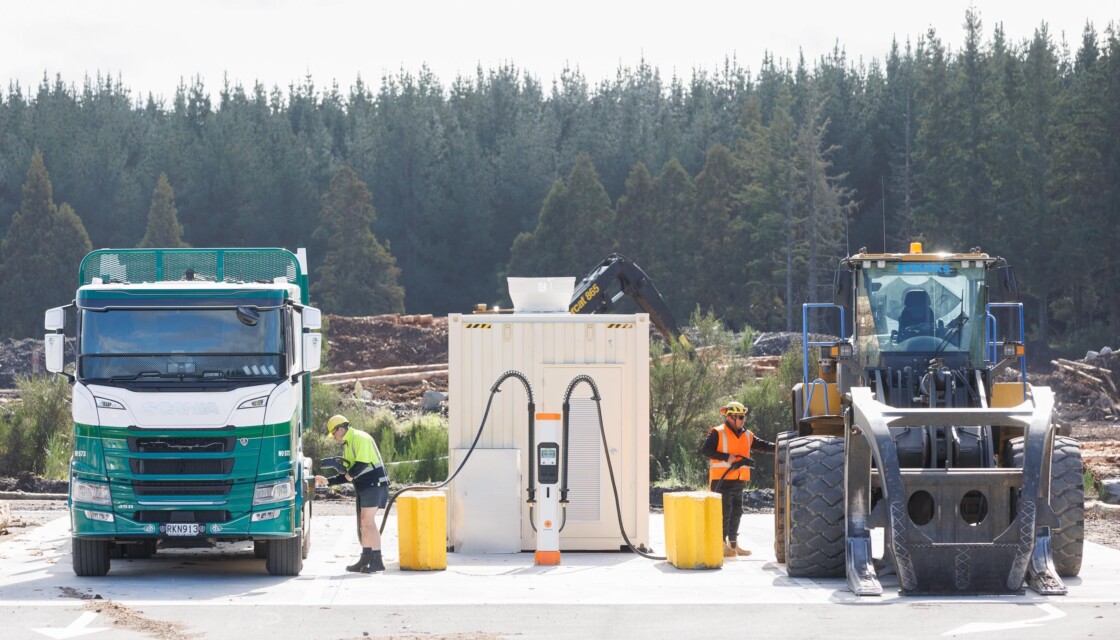
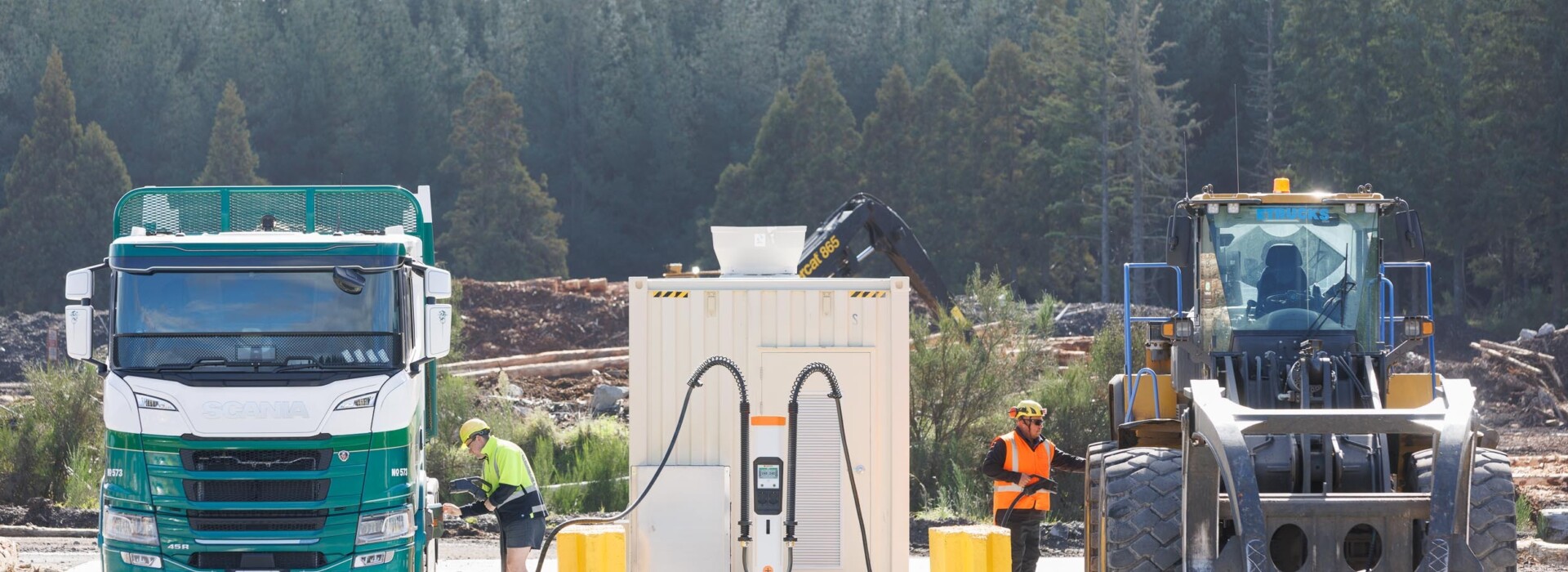
A major step forward in reducing emissions and future-proofing operations has been switched on at Kaingaroa Processing Plant (KPP), with the commissioning of a new high-capacity electric charger to support RFH’s growing electric fleet.
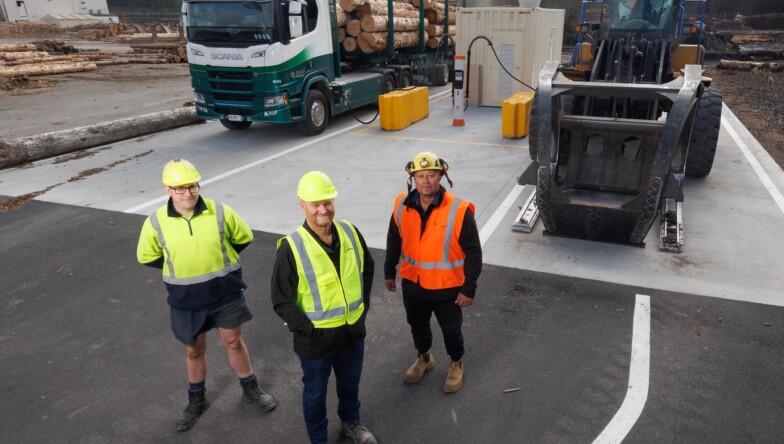
The 400kW charger has been installed to service a fully electric loader and newly introduced electric logging truck bought by Rotorua Forest Haulage (RFH). Together, these machines are replacing traditional diesel-powered equivalents and marking an important shift in how work is done across the supply chain.
The set-up is believed to be the first of its kind in the world, combining a high-capacity charger with both an electric loader and electric logging truck operating in a live forestry-related environment.
What’s more, there are times when logs processed at KPP will be loaded, transported and unloaded all by electric powered heavy vehicles, with our customer PermaPine investing in their own fully electric loader at their site near Reporoa.
General Manager for Sustainability, Colin Maunder, says the project is a practical step towards Kaingaroa Tipu’s long-term goal of eliminating fossil fuels from our operations.
“This reflects how, as a business, we are being more climate positive in our approach to the work we do, but more simply it’s also about learning, testing what works, building capability, and setting ourselves up for the future.”
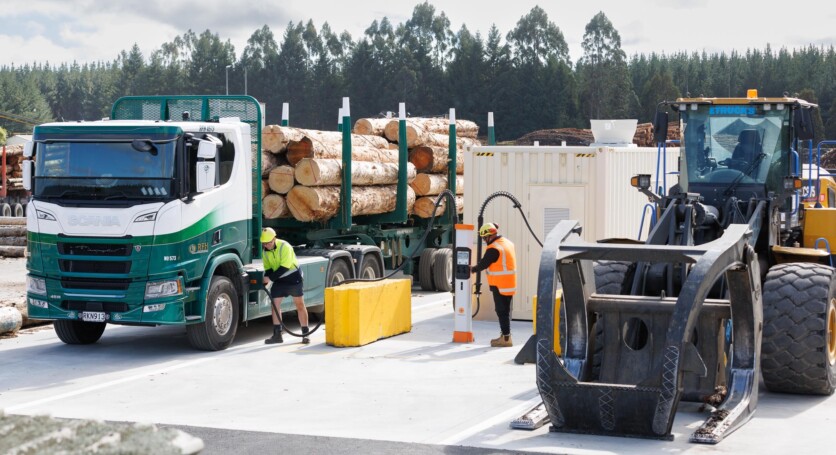
While the charger itself is a key feature, the project has involved much more behind the scenes. Kaingaroa Tipu has invested more than $1 million into the installation, including civil works, concreting, and upgrading electrical infrastructure to support the system.
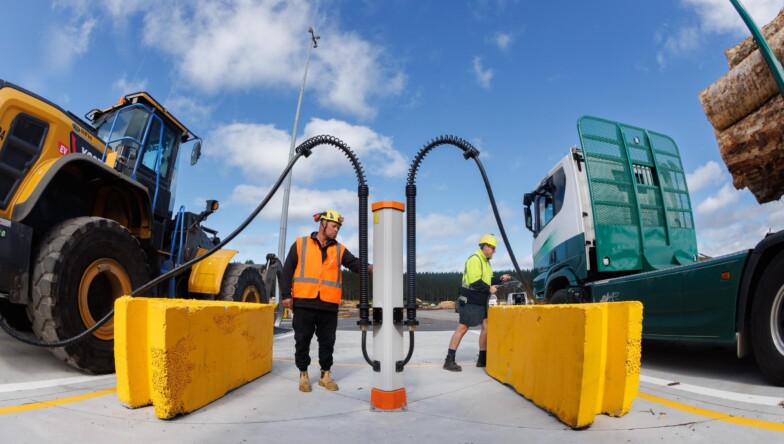
The charger can service two machines at once, splitting its output as needed. To ensure reliability in KPP’s demanding environment, much of the equipment has been housed within a protective container to shield it from dust and temperature extremes.
“This isn’t just plugging in a charger,” Colin says. “It’s building the infrastructure to support a different way of operating.”
RFH’s electric loader has already been operating at KPP for close to a year, while the electric logging truck is a more recent addition to its fleet. RFH received support from the Energy Efficiency & Conservation Authority (EECA) to adopt both vehicles.
Early indications are promising. The loader can be topped up during scheduled breaks and continue running through the day, while the truck uses short charging intervals to maintain its operating range. It also benefits from regenerative braking, capturing energy when travelling downhill.
Together, the machines are helping to reduce reliance on diesel, which has traditionally powered forestry operations.
Building an electrified network
KPP is already a highly electrified site, and this latest development strengthens that position. KPP site manager Phil Loest says the charger fits with KPP’s site philosophy of using locally generated electricity for processing wherever we can. Colin adds how it’s easy to overlook just how significant this is.
“If we were processing our stem logs in the forest, we’d typically rely on multiple diesel machines to process them. At KPP, that work is already electrified,” he says.
“That’s a big efficiency gain, and now we’re extending that electrification further into the supply chain.”
In some cases, logs processed at KPP are also handled by an electric loader at PermaPine after they arrive on site at Reporoa, creating an increasingly electrified pathway from processing through to delivery. This loader operates 24 hours a day, seven days a week and has clocked up 3000 operational hours over eight months.
A second electric loader is due to be delivered to PermaPine in June as part of efforts to further reduce operating costs and minimise the site’s environmental footprint. Charging infrastructure will keep the loaders and RFH’s electric truck powered up.
The collective efforts have been driven in partnership with RFH, who have taken a leading role by investing in electric heavy transport.
RFH Kaingaroa Site Manager Jay McLean says RFH was always keen to try something new, with the loader already proving its value over the past year at KPP.
“Having the charger here means we can keep it topped up all day. It can carry out the work of any other loader here in the yard. As a bonus it’s comfortable to drive, quiet and operator friendly," Jay says.
“The electric truck is very new to the fleet and it’s exciting to see it operating, especially now with diesel prices the way they are.”
“RFH took a bold step bringing this equipment in,” Colin adds. “Our role has been to support that through infrastructure and through the way we structure our partnerships.”
That support is part of a broader approach, with other contractors also beginning to explore hybrid and fuel-efficient machinery options.
Climate action & energy security
While reducing emissions is a key driver, Colin says the benefits go beyond climate considerations.
“With what we’re seeing globally, including volatility in fuel supply and pricing, this is also about energy security,” he says.
“Over time, fossil fuels will become harder to access and more expensive. Investing in electrification now helps future-proof our operations and reduces that risk.”
There are also benefits for operators. Electric machines are quieter, smoother, and produce less vibration than their diesel counterparts, making them more comfortable to operate.
“That has real advantages from a health and safety perspective,” Colin says. “It’s a better environment for people.”
The charger project is one piece of a wider programme of work underway at KPP, as the site continues to modernise with a strong focus on safety, efficiency, and sustainability.
“This isn’t a single solution,” Colin says. “It’s part of a broader transition. We’re taking practical steps, learning as we go, and building momentum.”
With the charger now operational, KPP is playing a key role in shaping what a lower-emissions forestry supply chain could look like, both now and into the future.